


Lost Wax Casting, also called precision casting or investment casting, is a process used to produce complex metal parts with fine detail and smooth surfaces. It is used for artwork as well as industrial components. Most ancient works of art were made this way. Today, many precision casting products and precision investment castings are manufactured by this method, especially when tight tolerances and intricate shapes are required.
Materials include wax, shell refractory such as quartz sand and bauxite, and a binder such as water glass, ethyl silicate, or silica sol.
The part is designed, and a wax pattern design is prepared according to the final casting shape.
A metal die is made to produce the wax patterns.
Wax is injected into the die. The shape of the wax piece is the casting after casting. The wax pattern is then removed from the die.
The wax pattern is checked and repaired. Flash, bubbles, parting lines, and other defects are removed to ensure a perfect pattern.
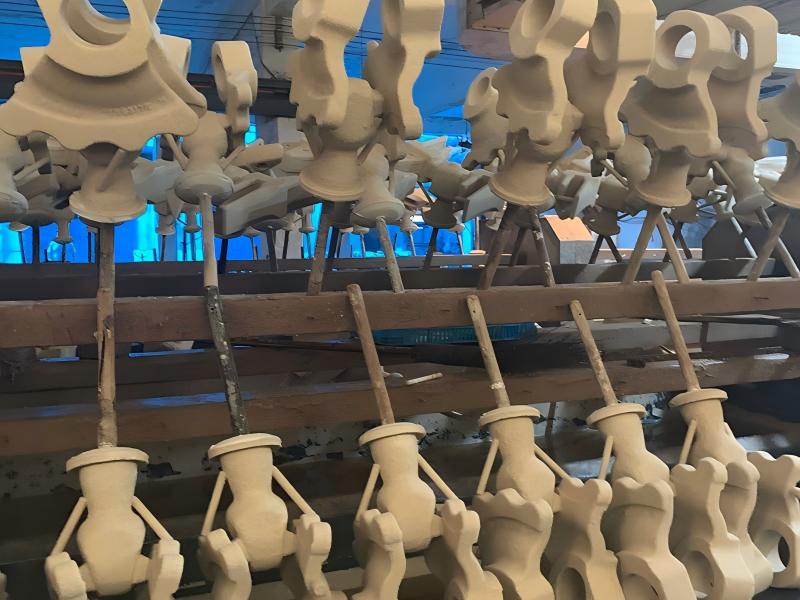
The repaired wax patterns are attached to a central runner or sprue, forming a tree. This system allows molten metal to flow into all parts.
The wax tree is dipped into ceramic slurry, then coated with sand. This gives the wax surface a layer of sand. It is then dried. After this layer is dry, the procedure is repeated, generally five to six layers. The last layer is only slurry, not sand.
When the shell is made, the wax is not completely covered by sand; part is exposed at the top. The shell is placed in a dewaxing device. The wax is heated, melted, and released, leaving a hollow ceramic shell.
The shell is preheated before pouring. Molten metal is poured into the cavity.
After the metal solidifies, the ceramic shell is vibrated or knocked out to remove the shell.
The lost wax casting parts are cut from the tree, ground, sandblasted, and finished. Inspection follows to meet customer requirements.
Lost Wax Casting offers excellent surface finish, high dimensional accuracy, and the ability to cast thin walls and complex features. It is widely used for pumps, valves, automotive parts, medical devices, aerospace components, and art pieces. For buyers seeking lost wax casting from china, many Chinese foundries provide competitive prices and reliable quality. A good supplier can deliver precision casting products, precision investment castings, and custom lost wax casting parts according to drawings or samples. Whether for small batches or mass production, lost wax casting remains a key process for high-quality metal components.


